


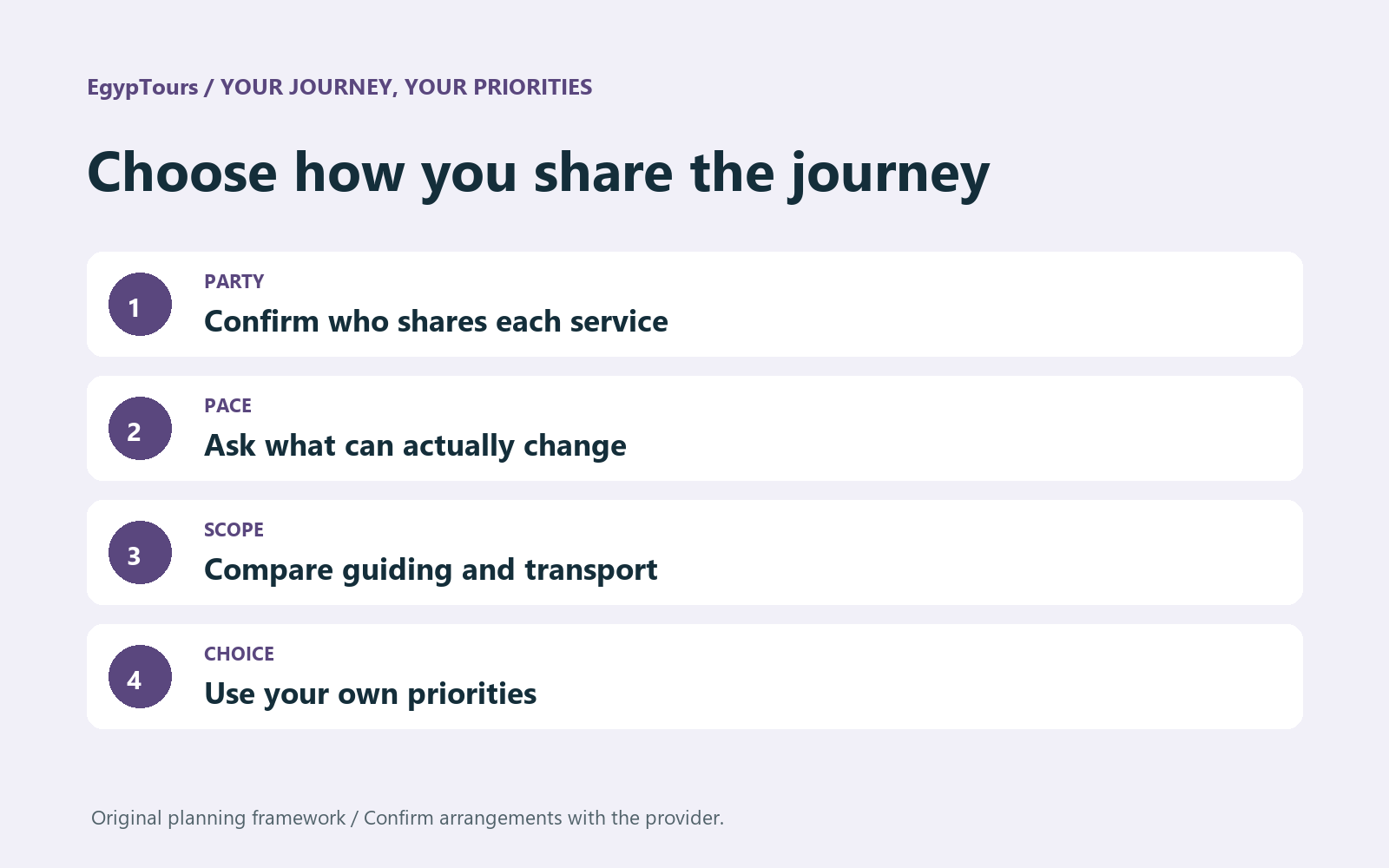
Choosing a private or small-group Egypt tour is a decision about how you want to share your time, attention and daily arrangements. Neither label explains the complete experience. A useful comparison looks at the actual group, guiding, transport and flexibility in the proposal. This guide gives you a practical way to ask those questions before choosing a travel format.
Define what the format means in each offer
Ask which parts of a private proposal are reserved for your party. Guiding, road transport, transfers and excursions might not all use the same arrangement. A private land itinerary, for example, does not by itself describe whether another component is shared. Have the organizer identify the scope rather than interpreting the word private as a promise about every service.
For a small-group tour, ask for the maximum number of participants and whether that limit applies throughout the itinerary. Also check whether different groups join for particular activities. You need the actual operating arrangement to compare two offers; the same marketing label can conceal different day-to-day experiences.
Think about how you enjoy sharing a day
A group format may appeal if meeting other travelers is part of the holiday you want. Consider how you feel about following agreed meeting times, listening to questions from others and moving through an activity at a shared pace. Your answer can be positive without assuming that you will have identical interests to everyone else.
A private format may appeal if your party has a particular focus or wants more direct discussion with a guide. Explain the interest that motivates this preference. You will get a more useful response by asking how an art-focused visit would work than by assuming that private guiding automatically means unlimited time or specialist expertise.
Ask what flexibility is genuinely available
Request an example: if you want to spend longer at the first visit, which later part could change? Ask who makes that decision, whether there is an extra cost and what cannot be moved. Entry arrangements, transport commitments and other reservations can constrain a private day as well as a group day.
For a shared itinerary, ask whether there is any independent time and how participants rejoin afterward. A scheduled free period is different from permission to change the whole program. Establish the practical boundary before booking, especially if one person in your party prefers to skip an activity.
Compare guiding and transport separately
- Is the guide with you throughout the itinerary or only at specified visits?
- Which language is used, and is guiding shared with another party?
- How is the transport arranged between each named part of the route?
- Which pickups are individual and which combine other travelers?
- Who is your contact when the day changes?
- What arrangements apply during any independent time?
Write the answers beside each proposal rather than relying on an overall impression. If either offer includes a river stay, review the Nile cruise inclusions guide as well. The travel format and the scope of a particular service are related questions, but one does not answer the other.
Read the cost in the context of your own party
Compare the quoted total for your dates and number of travelers. Ask whether there are minimum participation conditions, room arrangements or supplements affecting that figure. Do not assume one format is always cheaper: the relevant comparison is between the complete written offers actually available to your party.
Separate the price of the core program from optional choices. If a desired experience appears in one offer and is optional in another, include the difference in your comparison before judging value. Our quotation comparison checklist can help you identify those mismatches without reducing the choice to the cheapest headline.
Check what happens before departure and on the day
For a group departure, ask whether it is confirmed and what happens if a participation threshold is not reached. For either format, read the cancellation and change terms before making another commitment that depends on the tour. Ask who will notify you and through which channel if arrangements change.
Also confirm the meeting instructions you will receive, what you should do if delayed and how to reach the organizer during the program. These practical details are more helpful than a general promise of seamless travel. Ask the provider to explain responsibility for each service in plain language.
Choose with a short preference statement
Try completing this sentence: “We would prefer [format] because [reason], but our essential requirements are [specific needs].” You might value meeting people while needing a clearly described daily pace. Or you might prefer your own guide while being comfortable with a shared component. State the requirements first, then see which proposal meets them.
Browse EgypTours travel programs for route inspiration and ask the team which arrangements can be offered for your dates. This article compares decision criteria; it does not establish that both formats are available for every program or confirm a service without a written proposal.

