


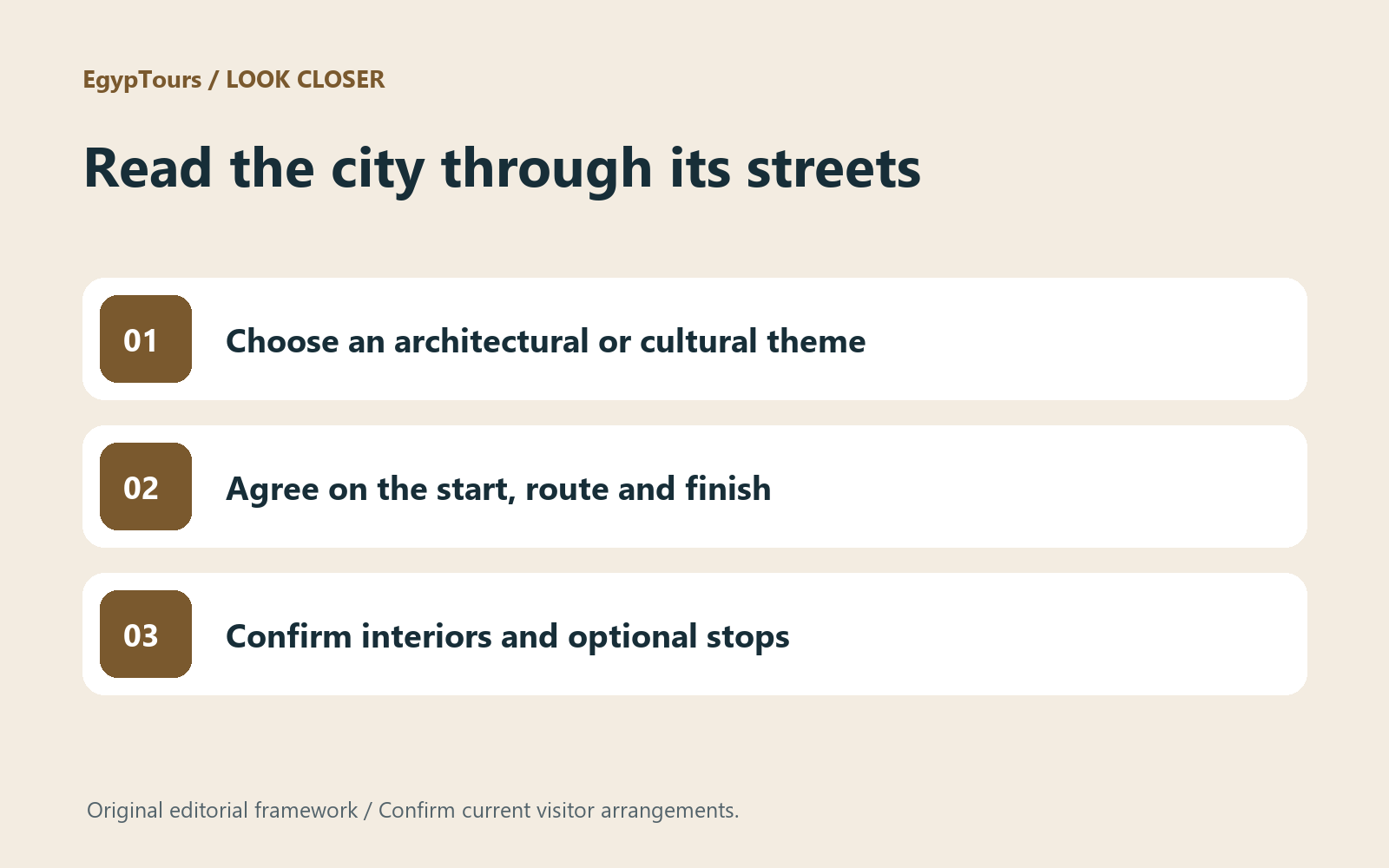
A Historic Cairo walk is most rewarding when you follow a theme rather than trying to collect every famous name in a single outing. Architecture, street life, craftsmanship and religious heritage offer different ways into the city. Use this guide to choose a focused route, understand what you are looking at and agree on practical details before the day.
Understand Historic Cairo as a living urban landscape
UNESCO’s Historic Cairo description presents a heritage landscape shaped by successive capitals and periods of development. Its significance includes the relationship between buildings and the surrounding urban fabric. That makes the spaces between monuments part of the experience, rather than simply the distance you cover before the next photograph.
Begin by noticing contrasts: a large gateway and a narrow lane, a monumental facade and the scale of a neighborhood street. Ask your guide how the route developed and which features belong to different periods. You do not need to memorize a list of dynasties to appreciate a place where later generations continued to build around earlier structures.
Choose one theme to connect your stops
A route focused on architecture might compare entrances, courtyards and the way buildings meet the street. A craftsmanship theme might concentrate on materials and decorative techniques visible along the agreed route. A history theme could explore how patronage and changing political centers affected what was built. These are options to discuss, not promises that every suggested interior or workshop will be accessible.
Tell the planner which theme appeals most and how much explanation you enjoy. Someone interested in details may prefer fewer stops with longer discussion. Someone looking for an introduction may want a broader orientation with a small number of clear examples. Both can be worthwhile if the guide understands the brief.
Ask for a route with named starting and finishing points
Request an outline showing where you meet, which area you walk through and where you finish. UNESCO identifies Al-Muizz as a central north-to-south street within the historic urban core and discusses surviving city gates. Those names can help you orient a conversation, but they are not a ready-made walking itinerary or a statement about current access.
Ask the organizer to explain the distances, surfaces, road crossings and breaks on the specific route proposed. Do not assume that a route described as easy suits everyone in your party. If you need a shorter walking section or a particular access arrangement, ask about the exact locations rather than relying on a general label.
Separate a street walk from interior visits
Seeing a building from outside and entering it are different experiences. For each planned interior, ask whether admission, guiding and any required arrangements are included. Confirm current visitor instructions for your date, particularly at places that also serve a religious or community purpose.
Keep an exterior-focused alternative in the plan if an intended visit changes. A guide can still help you interpret a facade and its setting, but that should be an agreed alternative rather than a surprise substitution. Ask how any change affects the services or price in your written proposal.
Make photography and shopping deliberate choices
If photography is important, explain whether you want time to observe architectural details or simply a few personal pictures along the route. Follow current venue rules and ask before photographing people. Allow your guide to identify appropriate stopping places without blocking entrances or the movement of people using the street.
Similarly, say whether you want shopping time. Ask if any planned shop visits are optional and how they fit the walking theme. You can be interested in craftsmanship without wanting a purchasing stop. Agreeing on that distinction helps keep the outing centered on your priorities.
Connect the walk to the rest of the day
Review where you will start before the walk and what follows it. Include the actual transfer arrangements and a practical meeting point after any independent time. Avoid adding another major visit merely because it appears nearby on a general Cairo map; ask how the full sequence will work for your party.
Use the Cairo and Giza destination guide to identify wider interests, and the sightseeing day bag checklist to prepare for the agreed route. Adapt your packing to the current instructions for the places you will enter.
A useful inquiry to send your planner
Tell EgypTours your preferred date, starting area, walking preferences and main interest. Ask for a route separating street exploration, interiors, breaks and optional shopping. Request confirmation of the guide, transport, admission and terms before booking. The framework here helps you make choices; it does not confirm access or a particular service for your dates.

