


A museum visit in Egypt becomes more rewarding when you choose what you want to understand before choosing how many rooms to cover. You might be drawn to royal craftsmanship, everyday objects, architecture or the way a collection tells a story. This guide helps you turn those interests into a manageable museum day, with a clear route and realistic arrangements.
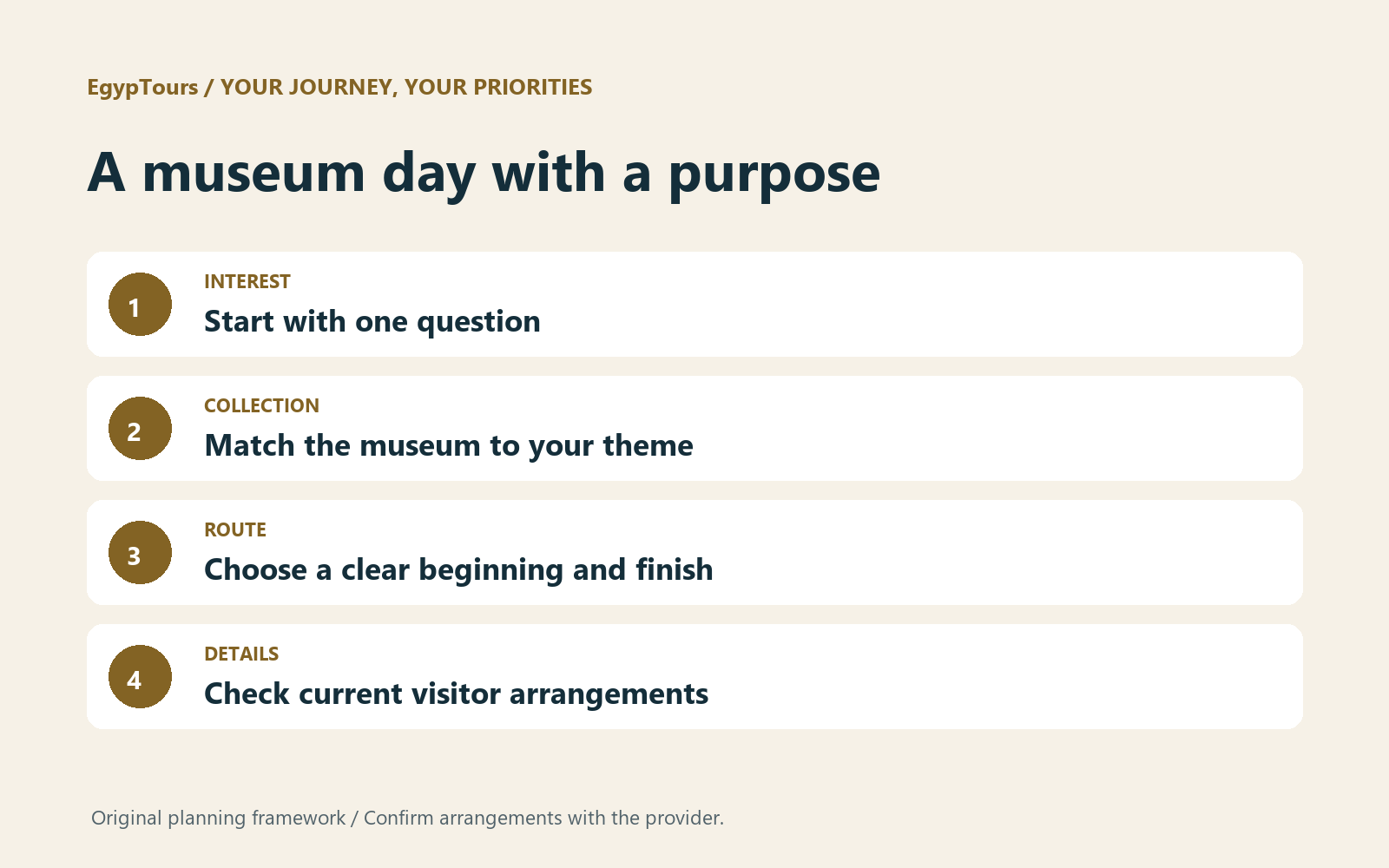
Start with a question you want the visit to answer
Instead of setting a goal to see everything, write one question. How did people furnish their homes? What can a royal object tell you about status? How do different materials change the appearance of a sculpture? A question gives your visit a thread. It also helps a guide understand the kind of explanation you would enjoy.
Choose a second interest as an option, rather than another obligation. If your main interest is decorative detail, for example, your optional theme might be how objects were made. You can follow that theme if attention and time allow. You will still have a coherent visit if you decide to stop after your first priority.
Match the collection to your interest
Use the museum’s own website to identify its collections and visitor information. A museum name in a tour description does not tell you which galleries the proposed visit actually covers. Ask the organizer to name the museum precisely and explain how the suggested route connects with your interests.
For example, the Grand Egyptian Museum’s official visitor and ticketing website describes its Main Galleries, Tutankhamun Galleries and other visitor areas. Check that source directly for the arrangements applying to your intended date. This article does not reproduce admission prices, opening times or ticket conditions that could change before you travel.
Choose a route with a beginning, middle and finish
Ask for a short explanation of the route before the day. A useful outline could begin with an introduction to your chosen theme, continue through selected displays and finish with time to revisit an object independently. This is a planning example, not a fixed route through any particular museum.
Agree on a meeting point if members of your party explore separately. Establish whether the visit ends inside the building, at a particular exit or with a transfer pickup. A clear finish matters when another activity follows: an attractive gallery plan can still be impractical if nobody has allowed time to leave and meet the vehicle.
Decide how you want to learn
Some visitors prefer a guided introduction followed by independent viewing. Others enjoy a continuous conversation, while some want to read labels at their own pace. Ask what guiding arrangement is being offered, in which language and for which part of the visit. Entry and guiding are separate questions; confirm both.
If you have a specialist interest, explain it in advance rather than assuming every guide will focus on it. A request for discussion of artistic techniques is more useful than simply asking for an expert tour. Ask the organizer what they can actually arrange, and read the answer alongside the proposed itinerary.
Make the practical details part of the plan
- Check the official entry arrangements and any advance booking instructions for your date.
- Review current bag, photography, food and equipment rules before packing.
- Ask about the exact step-free route, seating or other facilities you need; do not infer them from a general accessibility label.
- Clarify the meeting point, transfer scope and what happens if your arrival is delayed.
- Keep the museum’s booking confirmation accessible through the channel agreed with the ticket provider.
Use our Egypt sightseeing day bag checklist as a starting point, then adapt it to the museum’s own rules. A general packing list should never override a venue’s current instructions.
Give the museum room in the wider day
Place your museum visit on the actual map of your day, including where you start and finish. Compare it with your hotel location and any other confirmed commitments. Avoid judging a combination solely by the number of attractions in the title. Ask the planner to explain the proposed sequence and the margin between activities.
The Cairo and Giza guide can help you identify wider interests. If you combine museum viewing with sightseeing elsewhere, distinguish the main experience from the optional extra. Decide which activity you would shorten if the first part takes longer than expected.
Use a short museum-day brief
Try this structure: “We are interested in [theme]. Our main priority is [experience]. We prefer [guided discussion or independent viewing]. We are starting at [area] and need to finish at [place or commitment]. Please explain the proposed museum route, ticket scope, guiding and transfers.” Replace the brackets with your own choices before sending it.
Should we try to cover the whole museum?
Choose coverage according to your attention and interests rather than treating every gallery as a requirement. Ask which sections support your main theme and which you could leave for another visit.
Can EgypTours help connect the visit to our itinerary?
Contact EgypTours with your dates, preferred museum and interests. Ask for the exact route and services in a written proposal before booking; this editorial guide does not confirm availability or an included service.

