


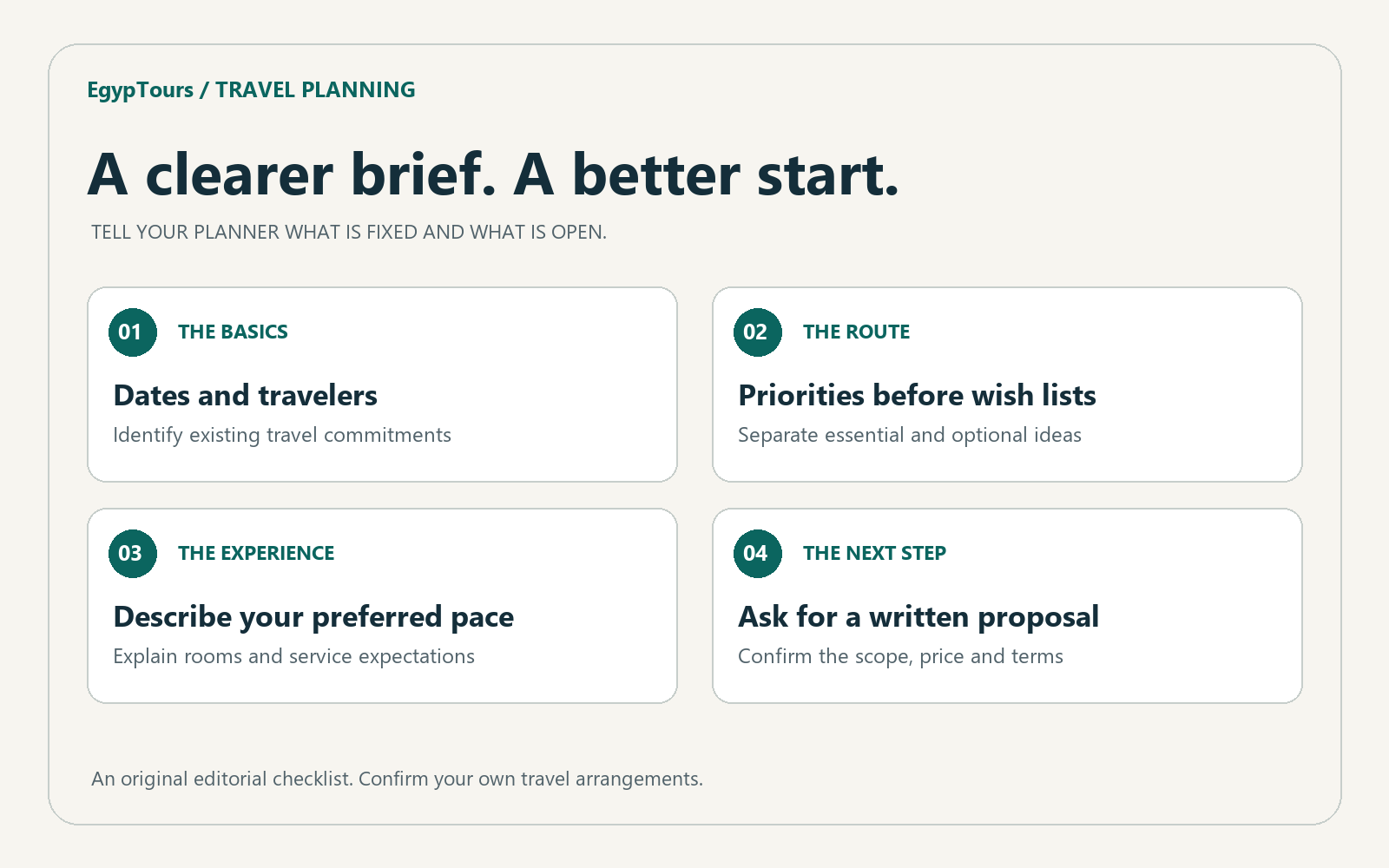
A clear Egypt private tour brief gives a travel planner enough information to propose a route that reflects your priorities. It does not need to be long. It needs to separate what is fixed, what you prefer and what you want the organizer to help you decide. This guide shows you how to write that first inquiry without turning it into a complicated document.
Begin with the decisions that are already fixed
Write down your intended travel dates, the number of travelers and the starting and finishing points you are considering. If dates are flexible, say so. If a flight or accommodation booking is already confirmed, explain the commitment and its date without assuming that the planner will see it from a general description of your holiday.
Keep the initial inquiry proportionate. You can usually describe an existing travel commitment without sending identity documents or unnecessary personal details. Provide booking information through the agreed channel when it is actually needed to confirm arrangements.
Choose a small set of priorities
List the experiences you most want and put them in order. Instead of naming every destination you have seen online, explain the reason behind each choice. “We want time to explore historic Cairo” provides a different starting point from “we want a brief city introduction before moving on.”
Separate an essential experience from a possible addition. This allows the planner to explain trade-offs without treating every suggestion as a fixed instruction. If you are undecided, use the published Egypt tour programs to identify a route you would like to discuss, rather than assuming the listed services are already confirmed for you.
Describe the pace in practical terms
Words such as relaxed, adventurous and luxurious can mean different things to different people. Explain the preferences behind them. Do you want fewer accommodation changes? Are you comfortable with a sightseeing day followed by onward travel? Would you prefer a fixed morning plan and a more open afternoon?
You do not need to design every hour yourself. Identify the parts of the trip that should feel different, then invite the organizer to suggest a realistic sequence. Ask where choices remain flexible and which elements require an advance decision.
State accommodation and service expectations
Describe the room arrangement and the features that matter to you. Ask for a named property or a clear explanation of when it will be confirmed. If a particular service is important, name it instead of relying on a broad category label.
For a journey involving the Nile, distinguish between the experience you want and a vessel or cabin you have actually booked. The Nile cruise cabin checklist can help you identify questions to include. A reference image or general description is not confirmation of a specific cabin.
Explain how you want the budget used
If you choose to share a budget range, state the currency, the number of people and the parts of the trip it should cover. Clarify whether international flights or independently booked accommodation sit outside that range. This avoids comparing proposals that include different parts of the holiday.
Say where you would rather spend more and where you are willing to simplify. You might prioritize a particular room arrangement or extra time at a destination over another activity. Your brief should help the planner explain those decisions, not create an expectation that every wish can be delivered at any price.
A short structure you can adapt
- Travelers: group size and any practical arrangements the planner needs to consider.
- Dates: intended dates, flexibility and existing commitments.
- Route: preferred start and finish, essential places and optional ideas.
- Pace: preferred rhythm and the transitions you would like to minimize.
- Accommodation: room setup and the features that matter most.
- Budget: range if you wish, currency and what it should include.
- Questions: the decisions you want help making before a quotation is prepared.
Use this as a set of headings, not a form that forces you to invent answers. “Please advise” is useful when a decision is genuinely open, provided your fixed commitments and priorities are clear.
Ask for the next step, not just a price
Finish the inquiry by asking what further information is needed and how the proposed route will be confirmed. Request a written outline of the services, price basis and booking terms before making a commitment. Do not treat an informal estimate as a completed booking.
When a proposal arrives, use the quotation-comparison guide to check it against your brief. The brief records what you requested; the quotation and confirmed terms record what the supplier is offering.
Frequently asked questions
Do I need to know the exact itinerary before asking?
No. State what you know and what you would like help deciding. A useful inquiry can begin with priorities rather than a complete day-by-day route.
Does “private” identify every included service?
Do not use the label as a substitute for an itemized proposal. Ask which arrangements are exclusive to your party and which services are included or optional.
Where can I send my brief?
Contact EgypTours with your preferred dates, route and priorities. This article is an original planning checklist; it does not guarantee availability, a particular service or a response deadline.

